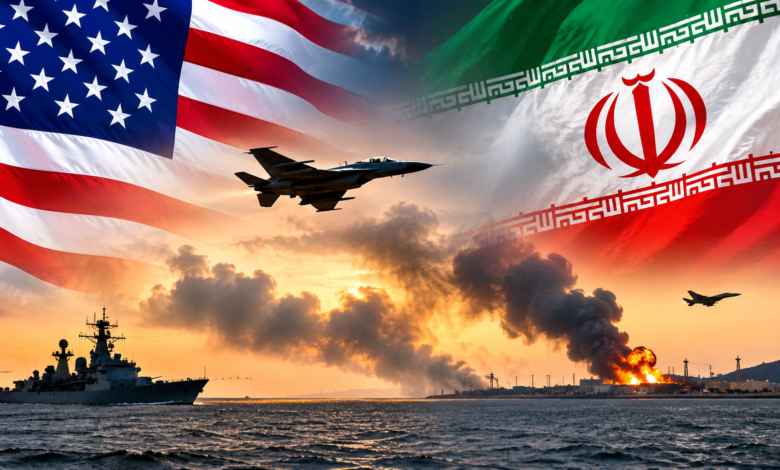
Trump confirms limited operation near Qeshm Island; Tehran reviews proposals linking Hormuz reopening with sanctions relief and nuclear talks
The United States carried out fresh limited strikes against an Iranian air-defence system near Qeshm Island on Friday, even as Qatar intensified diplomatic efforts to broker an agreement between Washington and Tehran over the Strait of Hormuz and Iran’s nuclear programme.
US President Donald Trump confirmed the operation, describing it as limited. According to reports, American forces struck an Iranian anti-aircraft missile launcher after it allegedly fired towards a US fighter jet. The operation came amid heightened military activity around the strategically important waterway.



Separately, Iranian state media reported two explosions in the Suza area of Qeshm Island. The circumstances and extent of damage from the reported explosions were not independently established.
The latest developments come amid a conflict that began on February 28, when the United States and Israel launched military operations against Iran. Tehran subsequently retaliated with missile and drone attacks targeting Israel and locations across the Gulf region.
Iran reviews Qatar-mediated proposals
Diplomatic efforts have gained momentum, with Qatar facilitating indirect communication between Washington and Tehran. Iran is reviewing proposals presented by Qatari mediators to address differences over its nuclear programme and the conditions for ending the conflict, according to two Middle East officials cited by the Associated Press.
A senior Iranian official also told Reuters that Tehran had submitted a nuclear proposal to Washington through Qatar. The proposal is reportedly under review by the US administration, although Iran has made clear that substantive negotiations would depend on Washington addressing its demands.
Strait of Hormuz at the centre of proposed framework
A reported two-day confidence-building framework discussed by mediators envisages the United States lifting its blockade on Iranian ports and releasing some frozen Iranian assets in exchange for Iran allowing international nuclear inspectors access to sites previously targeted in US and Israeli strikes.
A subsequent phase would involve reopening the Strait of Hormuz under a temporary maritime arrangement, followed by broader negotiations on Iran’s highly enriched uranium stockpile and other nuclear-related issues.
The proposal remains under discussion and has not been accepted by both governments. Tehran continues to demand sanctions relief, the release of frozen assets, compensation for war-related damage, an end to the US blockade and cessation of regional hostilities. Washington insists that Iran’s nuclear programme must be addressed in any comprehensive agreement.
Trump speaks with Qatar’s Emir
In a significant diplomatic development, Trump held a telephone conversation with Qatar’s Emir, Sheikh Tamim bin Hamad Al Thani, on Friday. The discussion focused on regional developments and Qatar’s mediation efforts to secure an agreement and prevent further escalation.
US Defence Secretary Pete Hegseth also spoke with Qatar’s Defence Minister Sheikh Saoud bin Abdulrahman Al Thani. Meanwhile, Iranian Foreign Minister Abbas Araghchi held discussions with his Iraqi and Tunisian counterparts on regional tensions and the prospects for resuming negotiations.
Egypt also urged the parties to demonstrate flexibility and pursue compromise solutions to avert another escalation.
Energy markets watch developments
The continuing crisis has kept global energy markets on alert. The Strait of Hormuz is a critical route for international oil and liquefied natural gas shipments, making any disruption a concern for energy-importing countries, particularly in Asia.
A prolonged disruption could affect oil supplies, shipping costs and global commodity markets. Expectations of diplomatic progress, however, have also influenced market sentiment.
With military operations continuing alongside indirect negotiations, the prospects for a breakthrough remain uncertain. The immediate challenge for mediators is to secure agreement on the sequence of confidence-building measures, maritime access and nuclear commitments.