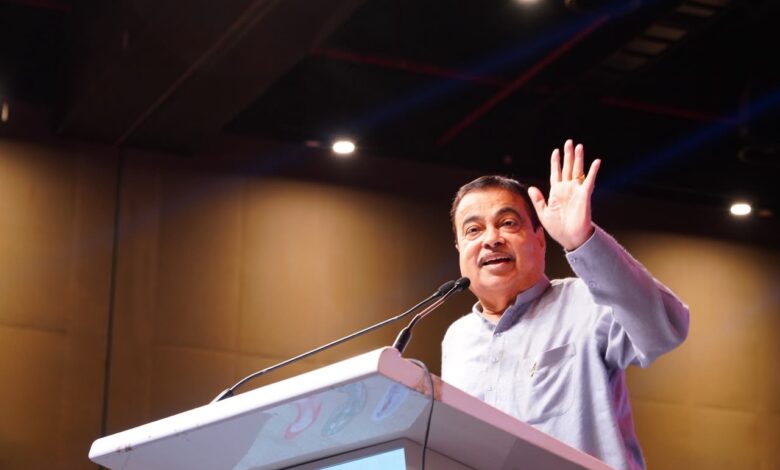
Union Minister for Road Transport and Highways Nitin Gadkari on Thursday called upon engineers, consultants, contractors and infrastructure agencies to make road safety their highest priority, adopt innovative construction technologies and work collectively towards building safer, more durable and sustainable roads across the country.
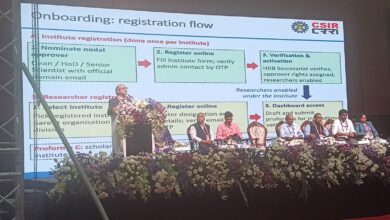
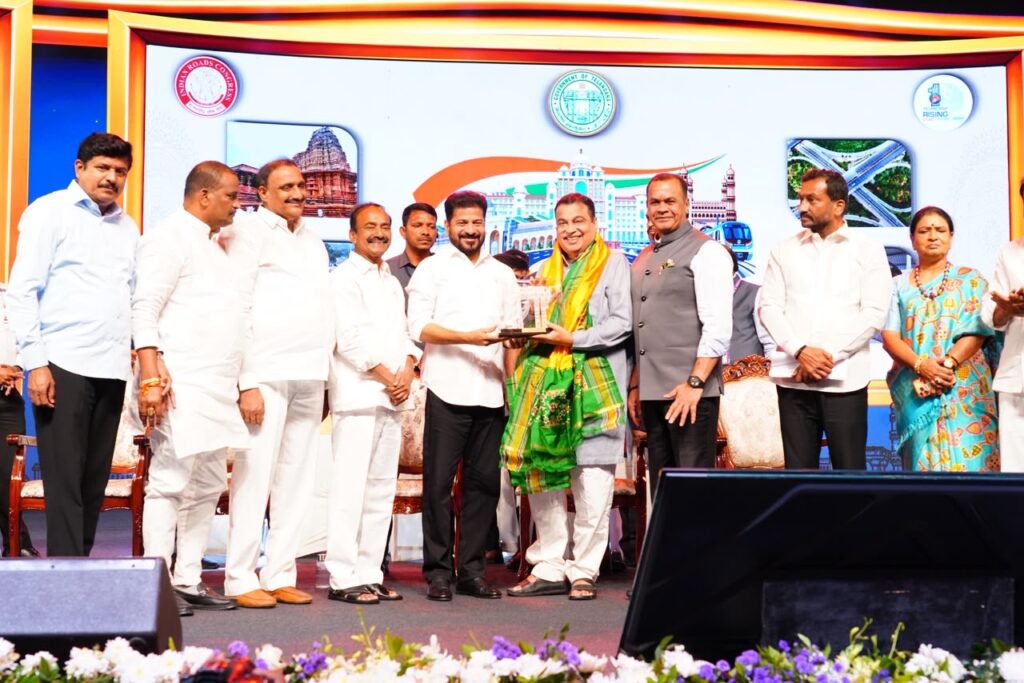
Addressing the 85th Annual Session of the Indian Roads Congress (IRC) at HITEX in Hyderabad, Gadkari said India’s road infrastructure had achieved significant milestones through the dedication and technical expertise of engineers, contractors and officials. He emphasised that the progress of the sector was not the achievement of any individual minister but the result of the collective efforts of the entire engineering fraternity.
He said India had established eight world records in road construction and that he had received three Guinness World Records medals and certificates about 15 days earlier. These achievements, he said, demonstrated the capabilities of Indian engineers, contractors and the infrastructure industry.

Gadkari described innovation, entrepreneurship, science, technology, research and skill development as essential drivers of progress. The challenge, he said, was to convert knowledge and innovation into economic wealth and practical outcomes.
Engineers urged to strengthen standards and innovation
Emphasising the need to continuously upgrade technical standards, Gadkari said India’s knowledge, technologies and engineering codes should remain comparable with international practices. Research and innovation must guide improvements in construction methods, materials and project execution.
He urged the Indian Roads Congress to encourage research into alternative construction materials and cost-effective technologies to reduce dependence on conventional materials. Such alternatives would also help address supply constraints and prevent situations in which limited suppliers could influence prices.
He called for stronger collaboration among engineers, researchers, consultants and the construction industry to develop materials and technologies suited to India’s infrastructure requirements.
Waste-to-Wealth approach for road construction
Highlighting the potential of converting waste into valuable resources, Gadkari said India should view waste as an economic asset rather than merely a disposal problem.
He advocated greater utilisation of treated sewage water for industrial and construction purposes, reducing dependence on fresh water. Referring to an example in which treated wastewater was supplied to industries, he cited an annual revenue potential of around ₹350 crore.
He also referred to a Hybrid Annuity Model project at Mathura involving sewage and sludge treatment facilities and the supply of treated water to an Indian Oil refinery. Triveni Engineering was associated with the project. According to the project details cited by him, the funding structure involved approximately 40 per cent government participation and 60 per cent private-sector participation.
The Minister also called for greater use of waste plastic in bitumen, rubber recovered from used tyres, steel slag and fly ash in road construction, wherever technically suitable and supported by appropriate research and approvals.
Referring to the use of steel slag in an airport runway in Australia, he said India should explore similar applications, considering the substantial quantities of steel slag generated by the country’s steel industry.
Gadkari said a comprehensive policy was needed to promote waste management and resource utilisation. He estimated that the waste economy had the potential to grow into a sector worth around ₹5 lakh crore, stressing the importance of both “Waste-to-Wealth” and “Knowledge-to-Wealth”.
Environmental protection must accompany infrastructure growth
The Minister said environmental protection should be integrated into highway planning and construction. He referred to initiatives involving the plantation of approximately 4.5 crore trees and urged road agencies to avoid unnecessary tree cutting.
Where relocation was unavoidable, he said, trees should be transplanted using suitable technology rather than removed. He acknowledged the efforts of Marathi actor Sayaji Shinde in promoting tree conservation and transplantation, citing examples of old trees being relocated in Aurangabad.
He called upon engineers and researchers to develop affordable and mechanised tree-transplantation technologies that could be adopted on a wider scale. Increasing green cover along highways while minimising environmental damage should be a priority, he said.
Gadkari also asked the IRC and technical experts to review Indian expressway manuals and construction standards against international practices to identify areas requiring improvement in design, construction, safety, durability and maintenance.
Road safety is the biggest challenge
Describing road safety as one of India’s most serious challenges, Gadkari cited approximately five lakh road accidents and 1.8 lakh road fatalities annually. He said around 66 per cent of those losing their lives belonged to the 18–34 age group, highlighting the loss of young people in road accidents.
He referred to concerns raised by Telangana Chief Minister A. Revanth Reddy over safety on National Highway-65 and said work had been initiated to address 18 identified black spots.
Sharing his personal experience, Gadkari recalled an accident during his tenure as Leader of the Opposition in Maharashtra, in which he suffered fractures at four places in his leg and was confined to his home for nearly two years. The experience, he said, had given him a deeper understanding of the physical, emotional and social consequences of road accidents.
Making a strong appeal to engineers, he said road safety must be treated as the top priority at every stage of infrastructure development.
He stressed the need to improve the quality of Detailed Project Reports (DPRs), arguing that technical consultancy for major infrastructure projects should not be awarded solely on the basis of the lowest quotation. Competence, experience and quality should receive greater weight in the selection of consultants.
Comparing the selection of DPR consultants with choosing a doctor for a critical medical procedure, he questioned the practice of compromising on technical expertise to reduce consultancy costs. He said the practice of awarding DPR consultancy work merely to the lowest bidder had been discontinued in the cases he referred to.
Inadequate planning, poorly designed junctions, the absence of required flyovers and underpasses, and ineffective road safety audits were among the shortcomings that contributed to accidents, he said. These issues should be addressed during the planning and design stages rather than after accidents occur.
He urged the engineering fraternity to work towards eliminating black spots and achieving the goal of zero road fatalities, emphasising that road safety was a collective responsibility of government agencies, engineers, contractors, consultants and road users.
IRC’s role in technical advancement
Gadkari appreciated the Indian Roads Congress for developing technical manuals, standards and guidelines for the road sector. He highlighted the importance of its work in areas such as climate-resilient roads, advanced pavement technologies, micro-surfacing, pavement maintenance, bridge repairs and retrofitting.
He encouraged the organisation to strengthen its technical contribution through research, innovation and international collaboration so that Indian infrastructure could meet emerging requirements.
Logistics costs targeted at around 9 per cent
Emphasising the need to reduce logistics costs to improve India’s global competitiveness, Gadkari cited studies by institutions including IIM Bangalore, IIT Kanpur and IIT Chennai. He referred to estimates placing India’s logistics costs at around 16 per cent, compared with approximately 12 per cent in Europe and the United States and 8 per cent in China.
He said improved road connectivity, expressways and multimodal transport infrastructure could reduce transportation costs, travel time and delays.
Referring to improved connectivity between New Delhi and Hyderabad through corridors linking Surat, Nashik, Ahmednagar, Solapur and Kurnool, he said efficient transport routes were essential to connecting major industrial and commercial centres.
According to the figures cited by him, logistics costs had declined by approximately six percentage points during the period under discussion. He said the country should aim to bring them into single digits, with a target of around 9 per cent.
Lower logistics costs would strengthen India’s export competitiveness, support industrial growth, generate employment and improve the efficiency of supply chains, he said.
Infrastructure investment has a multiplier effect
Gadkari underlined the economic significance of investment in roads, highways, bridges and logistics infrastructure. He cited an example in which an investment of ₹100 in infrastructure could generate an economic benefit of approximately ₹325 in terms of GDP impact.
He said government funding alone would not be sufficient to meet the infrastructure requirements of a rapidly developing country. Greater participation from private investors, financial institutions, contractors, consultants and technology providers was necessary.
He called for wider adoption of public-private partnerships to mobilise investment and accelerate infrastructure development.
International collaboration and collective excellence
The Minister called for stronger technical cooperation with international road organisations, including the American Association of State Highway and Transportation Officials, the Japan Road Association and the Korea Road Association.
India should learn from global best practices while developing its own technologies, standards and innovations suited to domestic conditions, he said. He stressed that the country should also contribute its engineering expertise to the international community.
Concluding his address, Gadkari said excellence was a continuous journey and no individual or institution could claim to be perfect. He referred to the progression from Uttam (good) to Adhik Uttam (better) and Sarvottam (best), saying that efforts towards improvement should continue without limits.
Using a mathematical analogy, he explained that when two individuals work independently, their contributions may be represented as A² + B². When they work together, the result becomes (A+B)², which includes the additional term 2AB. He said this additional contribution represented the strength of teamwork and collective effort.
He urged ministers, government officials, engineers, concessionaires, consultants and contractors to work together, saying that collective efforts would produce outcomes far greater than individual contributions.
Gadkari expressed confidence that the deliberations at the 85th IRC session would help guide India’s future infrastructure development. He said the engineering fraternity had a crucial role in building infrastructure that was safe, durable and sustainable, while contributing to the development of Telangana and the country.
He concluded by calling for a united effort to strengthen India’s infrastructure, support Telangana’s development and help the country emerge as a global leader.