The fire at Pacifica Hill Crest, a high-rise residential complex in Nanakramguda near Hyderabad’s Financial District, has highlighted the need for stronger fire safety measures, electrical inspections and emergency preparedness in high-rise buildings.
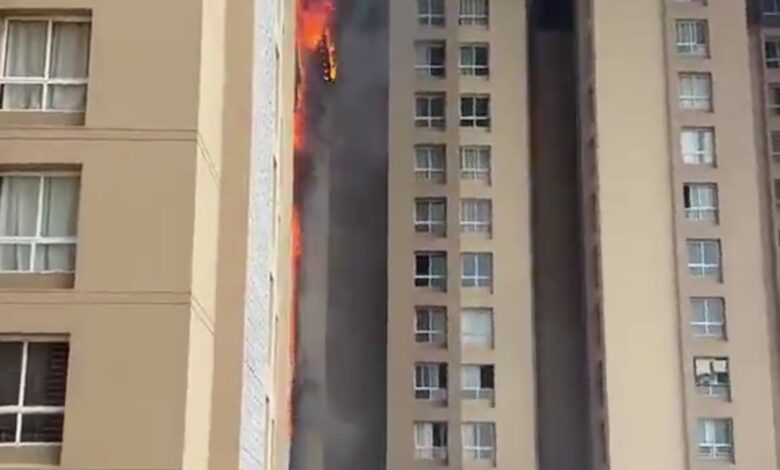
The fire broke out around 12.05 p.m. on Thursday, November 19, in one of the residential towers. Four fire tenders were deployed, along with a Bronto Skylift from Madhapur Fire Station, according to the incident details provided. Flames and smoke reportedly spread vertically along the building’s exterior, affecting multiple floors.
Residents were evacuated as a precaution. Automatic sprinkler systems reportedly activated and helped contain the fire. No casualties or injuries were reported.



Preliminary reports indicated a possible geyser-related electrical fault, but the exact cause remains under investigation. The reported spread of flames along the exterior and damage to air-conditioning units and facade components have raised questions about the fire performance of building exteriors and the effectiveness of fire compartmentation.
The incident highlights several areas that require attention from developers, building owners, facility managers, fire safety professionals and regulatory authorities.
Facade protection and fire compartmentation
High-rise buildings should incorporate tested fire-resistant facade materials and effective fire-stopping arrangements. External cladding, insulation, facade cavities, slab-edge barriers, service penetrations and air-conditioning installations require particular attention to prevent fire from spreading between floors.
Electrical and plumbing shafts should have appropriate fire-rated enclosures, with openings properly sealed to restrict the movement of flames and smoke. Fire doors and compartmentation systems must also be maintained in working condition.
Electrical safety and preventive maintenance
Regular electrical safety inspections are essential in high-rise residential complexes. These should cover distribution boards, wiring, earthing, circuit breakers, overload protection and residual-current protection devices.
Thermographic scanning can help identify overheating in electrical connections and equipment before failures occur. Geysers, air-conditioning systems and other electrical appliances should undergo periodic inspection, with particular attention to faulty thermostats, damaged cables, overloaded circuits and unauthorised modifications.
Fire protection systems must remain operational
Automatic sprinklers, smoke detectors, fire alarms, wet risers, hydrants, landing valves and firefighting pumps should be maintained and tested regularly.
Inspections should verify water storage capacity, hydraulic pressure, pump performance, emergency power backup and integration between alarm and firefighting systems. Staircase pressurisation and smoke extraction systems should also be checked to ensure that escape routes remain usable during emergencies.
Technology-enabled monitoring and response
IoT-enabled fire detection, intelligent building management systems and real-time monitoring can improve early warning and emergency coordination.
Centralised fire command facilities should provide access to alarm systems, CCTV feeds, floor-wise building layouts and the operational status of firefighting equipment. Thermal imaging and drones may also support external assessment by emergency responders, subject to operational and aviation regulations.
Evacuation planning and resident awareness
Every high-rise residential complex should maintain a building-specific emergency response and evacuation plan. Regular mock drills should involve residents, security personnel, facility managers and maintenance teams.
Residents must be familiar with protected staircases, designated refuge areas and emergency exits. Ordinary passenger lifts should not be used during a fire unless specifically designated and authorised for emergency evacuation. Evacuation may be simultaneous, phased or limited to affected areas, depending on the location of the fire, smoke conditions and instructions from the incident commander.
Special assistance arrangements should be made for elderly residents, children and persons with disabilities. Clear emergency announcements and accessible evacuation instructions are equally important.
Independent audits and regulatory oversight
The incident underscores the need for a comprehensive fire safety review of high-rise residential buildings across Hyderabad, particularly in rapidly developing areas such as the Financial District, Nanakramguda, Narsingi, Puppalaguda and Kokapet.
The affected tower should undergo a detailed assessment covering electrical installations, facade components, air-conditioning units, service shafts and the operational condition of all fire protection systems.
In the immediate term, building managements and residents’ associations should arrange independent fire and electrical safety audits, address identified deficiencies and conduct evacuation drills.
Over the longer term, regulatory authorities should strengthen compliance monitoring, periodic inspections, maintenance certification and accountability mechanisms for developers, building owners and facility management agencies.
Applicable Telangana Fire Services requirements and the National Building Code provisions should guide these assessments. A Fire No Objection Certificate should not be treated as a substitute for continuous maintenance, periodic testing and operational readiness.
From reactive response to preventive safety
As Hyderabad expands vertically, fire safety must be treated as an essential part of building design, construction, operation and maintenance rather than merely a statutory approval requirement.
The Pacifica Hill Crest incident is a reminder that effective fire prevention depends on sound engineering design, appropriate construction materials, reliable firefighting systems, regular inspections and informed residents.
A shift from reactive firefighting to proactive risk assessment, preventive maintenance and technology-enabled emergency preparedness is essential to make high-rise residential communities safer and more resilient.
The exact cause of the fire and the extent of structural and facade damage remain subject to investigation and assessment by the concerned authorities.