
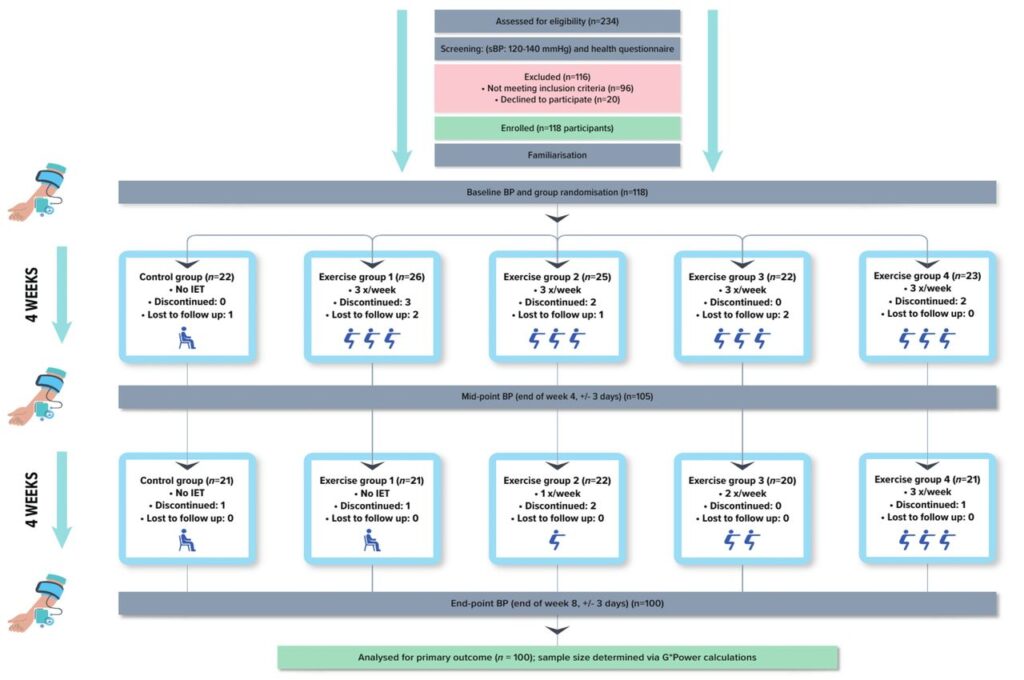
The study, titled “Isometric Exercise Training and Blood Pressure Control: Exploring the Dose-Response to Training Frequency in a Randomised Controlled Trial,” examined 100 adults with normal to high-normal blood pressure. The research was conducted by Harry T. Swift and colleagues from institutions in the United Kingdom.
The findings showed that a structured four-week programme of lower-body isometric exercises, performed three times a week, produced an average reduction of approximately 9.45 mmHg in systolic blood pressure compared with the control group. Improvements were also observed in diastolic blood pressure and mean arterial pressure.
Exercise frequency influences results



To examine how exercise frequency affected the benefits, participants continued with different training schedules for another four weeks. They were assigned to exercise three, two or one time per week, or stop training altogether, while a separate group served as the control.
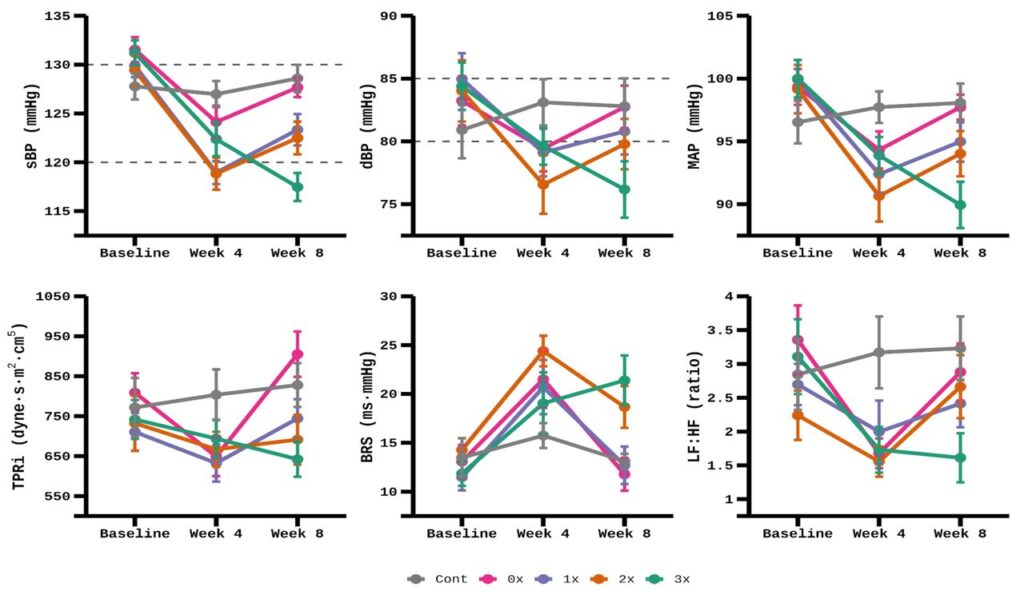
At the end of the eight-week study, participants who continued exercising three times a week recorded the greatest reduction in systolic blood pressure, approximately 13.73 mmHg below their baseline readings.
Those exercising once or twice weekly also maintained reductions in systolic blood pressure and mean arterial pressure, although the improvements were smaller. Participants who stopped exercising experienced a reversal of the initial benefits, with blood pressure readings moving towards levels comparable to the control group.
The results suggest that while fewer sessions may preserve some short-term improvements, maintaining a three-day weekly routine offers more consistent benefits.
How does a wall sit work?
Unlike aerobic exercises that involve continuous movement, isometric exercises involve contracting muscles while holding the body in a fixed position. A wall sit is a familiar example.
In a wall sit, a person leans against a wall, bends the knees into a comfortable squat position and holds the posture for a prescribed duration. The muscles remain engaged without significant movement at the joints.
Researchers examined several physiological mechanisms that may explain the reduction in blood pressure, including changes in total peripheral resistance, heart rate variability and baroreflex sensitivity. These mechanisms are associated with the regulation of blood circulation and the autonomic nervous system.
The study found that participants continuing the exercise three times weekly maintained improvements across the measured vascular and cardiac autonomic indicators.
Why the findings matter
High blood pressure is a major risk factor for heart disease, stroke and kidney disease. Regular physical activity is an important component of cardiovascular health, alongside a balanced diet, weight management and appropriate medical care.
Isometric exercises may be particularly useful for people who find it difficult to maintain conventional workout routines because of time constraints or limited access to fitness facilities. Their relatively simple format makes them a potential addition to workplace wellness programmes and community-based physical activity initiatives.
However, the study involved only 100 participants and lasted eight weeks. Further research is needed to establish whether the improvements can be sustained over longer periods and whether similar results occur among people with diagnosed hypertension and other health conditions.
Exercise is not a substitute for medication
The findings should not be interpreted as a reason to discontinue prescribed blood pressure medication. People undergoing hypertension treatment should continue following their doctor’s advice and monitor their blood pressure regularly.
Individuals with cardiovascular conditions or knee and joint problems should consult a healthcare professional before beginning wall sits or other strenuous isometric exercises. Exercise intensity and duration should be appropriate to individual fitness and health conditions.
Consistency is key
The central message from the research is that regularity matters. Three sessions of isometric exercise per week produced the greatest improvements in this short-term trial, while reducing the frequency to one or two sessions preserved some benefits. Stopping the exercise, however, was associated with a loss of the improvements.
A simple wall sit may therefore serve as one practical component of a broader strategy for improving cardiovascular health, provided it is performed safely and consistently.